
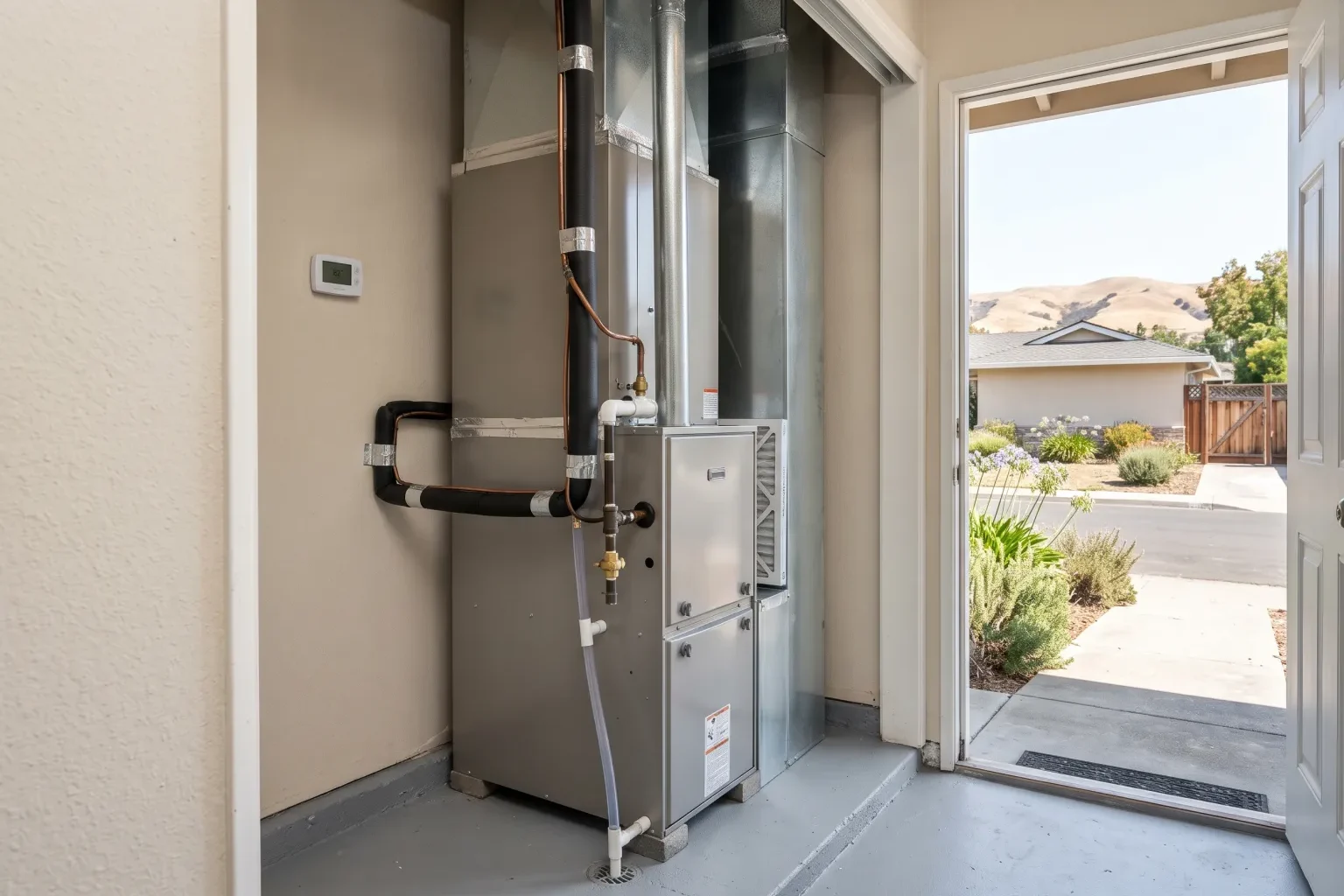
The short answer
If your furnace or heat pump won't start, blows cool air, cycles on and off, or makes new noises, a heating repair visit can usually find and fix the cause in one trip. We test the whole system, explain what we found, and lay out repair and replacement options so you can decide. Bay Area rules don't force you to replace working equipment.
San Jose winters are mild and damp, so many furnaces and heat pumps sit unused for months and then have to run hard on the first cold nights of the season. When the heat won't come on, runs weak, or starts making new noises, a focused repair visit usually finds the cause. Most of the time the fix is a worn part, a dirty component, or a control problem, not a whole new system. This page covers the signs worth acting on, what our technicians check, how we weigh repair against replacement under current Bay Area rules, what affects the cost, and what to expect when we come out to your home in San Jose or a nearby South Bay city.
Signs Your Heating System Needs Repair
Heating problems often start small. A system that takes longer to warm the house, or one that makes a sound it didn't make last winter, is easier and usually less disruptive to fix before it stops working on a cold night. Watch for these signs:
If you smell gas, leave the house right away and call your gas utility or 911 from outside. If a carbon monoxide alarm goes off, get everyone out and call for emergency help. Don't try to restart the furnace yourself.
- The system won't turn on, or the thermostat calls for heat and nothing happens
- Air from the vents is lukewarm or cool when it should be warm
- The furnace or heat pump turns on and off in short, frequent cycles
- Some rooms stay cold while others heat normally
- New banging, squealing, grinding, rattling, or clicking sounds
- A burning or musty smell that lasts past the first few minutes of the season
- A heat pump outdoor unit that stays iced over or never defrosts
- Heating bills that climb without a change in how you use the system
- A furnace breaker that keeps tripping or an igniter that clicks without lighting
What We Check During a Heating Repair
We look at the whole system, not just the part that seems broken. A failed component is sometimes a symptom of another problem, like a clogged filter that caused overheating, or low airflow that wore out a blower motor. Finding the root cause helps keep the same repair from coming back.
Depending on whether you have a gas furnace, a heat pump, or a combination, our inspection typically includes:
- Thermostat settings, wiring, and communication with the system
- Air filter condition and airflow through the return and supply
- Igniter, flame sensor, burners, and gas valve on gas furnaces
- Heat exchanger condition and signs of cracks or corrosion
- Flue and venting, plus a check for carbon monoxide concerns
- Blower motor, capacitor, and belt or wheel condition
- Limit switches, pressure switches, and other safety controls
- Heat pump refrigerant performance, reversing valve, and defrost operation
- Electrical connections, fuses, and breakers serving the equipment
- Visible ductwork for disconnected sections or major leaks
Repair or Replace: How to Decide
Most heating calls end in a repair. A worn igniter, a dirty flame sensor, a failed capacitor, or a faulty thermostat can usually be fixed the same day. Replacement starts to make sense when a major component like the heat exchanger or compressor has failed, when the system needs repeated repairs, or when it can no longer heat the home comfortably. We'll explain what we found and give you both paths when both are reasonable, and the decision is yours.
Local rules are part of the picture, but they don't force your hand. The Bay Area Air District's appliance rules don't require you to replace working equipment. They apply only when an existing furnace or water heater fails or is replaced. Repairing your current furnace is allowed.
If you're planning ahead, it helps to know that under the Air District's furnace rule, natural gas furnaces manufactured from 2029 must meet a zero-NOx emission standard. In practice, that points homeowners toward heat pumps when they replace a furnace after that date. If your furnace is aging, it can be worth thinking now about whether your next system will be a heat pump. Water heater rules are on a separate track and may change, so check the current rule before planning that replacement.
On incentives: the federal Energy Efficient Home Improvement Credit covered qualifying heat pumps placed in service before December 31, 2025, and isn't available for new installations after that. Bay Area homeowners can still check BayREN and their local clean energy provider for current heat pump and electrification incentives. Those amounts change by funding cycle, so we confirm the current offer before including it in any quote.
What Affects the Cost of Heating Repair
Every repair is different, and we don't guess at a cost before we've diagnosed the problem. Once we know what's wrong, we explain the repair and its cost before any work starts. These are the main factors that affect the total:
- The type of system: gas furnace, heat pump, dual-fuel, or wall furnace
- Which part has failed and whether it's a common or specialty component
- Parts availability, especially for older or less common equipment
- How easy the equipment is to reach, such as an attic, crawlspace, closet, or garage
- Whether related problems, like airflow or venting issues, also need attention
- How much time diagnosis and repair take
- Timing, including urgent or after-hours scheduling
How a Heating Repair Visit Works
We aim to make the visit simple and predictable. Here's what to expect from the first call to the finished repair:
- You contact us and describe what the system is doing, and we schedule a time that works for you
- The technician arrives, asks a few questions, and looks at the thermostat and equipment
- We run diagnostic tests to find the cause, not just the symptom
- We explain what we found in plain language and lay out your options and their cost
- With your approval, we make the repair, often using parts carried on the truck
- We test the system through a full heating cycle to confirm it's working and safe
- We share any other issues we noticed and simple steps to help prevent repeat problems
Heating Repair by city
- Heating Repair in Campbell
- Heating Repair in Santa Clara
- Heating Repair in Los Gatos
- Heating Repair in Monte Sereno
- Heating Repair in Saratoga
- Heating Repair in Cupertino
- Heating Repair in Milpitas
- Heating Repair in Sunnyvale
- Heating Repair in Mountain View
- Heating Repair in Los Altos
- Heating Repair in Fremont
- Heating Repair in Los Altos Hills