
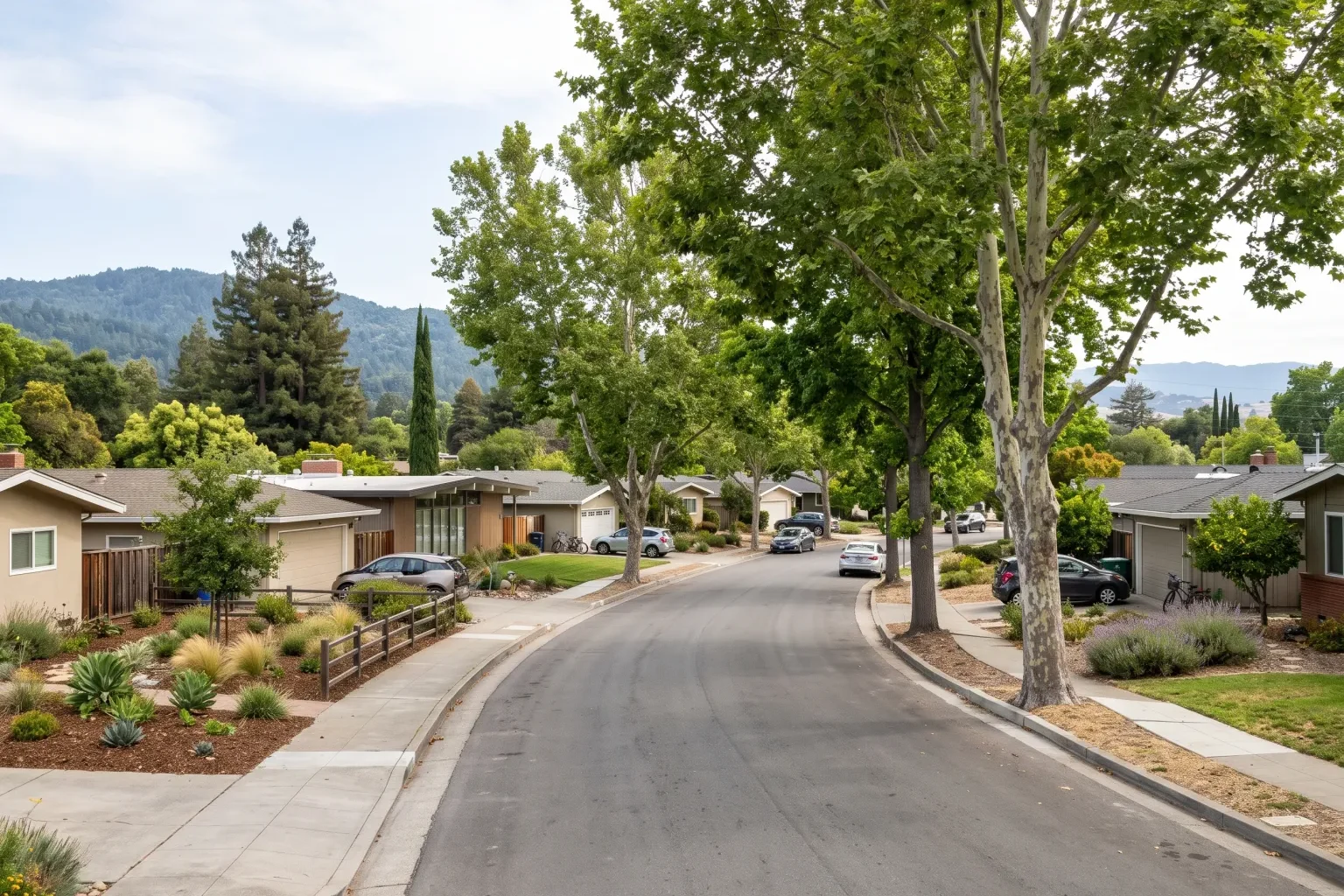
The short answer
A heat pump can heat and cool a Mountain View home through mild, damp winters and dry summers. We size the system to your house, check your electrical panel and ductwork, and confirm current BayREN and local incentives before quoting. Working furnaces don't have to be replaced, but new gas furnaces made from 2029 must meet a zero-NOx standard.
Many Mountain View homeowners ask about heat pumps when an old furnace starts acting up, an air conditioner reaches the end of its life, or they want one system that handles both heating and cooling. Prime Choice HVAC Repair Service installs heat pumps in homes across Mountain View's 94040, 94041, and 94043 ZIP codes, about 11 miles northwest of our San Jose base. This page covers what installation involves for a home here, what to check before you commit, and how current Bay Area rules and incentives affect the decision.
Why heat pumps suit Mountain View's climate
The Santa Clara Valley has a Mediterranean climate: dry summers and mild, damp winters. Mountain View sits closer to the Bay than the inland and southern parts of the valley, which run noticeably hotter in summer. That means a heat pump here rarely faces extreme heat or deep cold, the conditions where heat pumps work hardest.
In winter, a heat pump moves heat from outdoor air into your home instead of burning gas. In summer, the same equipment runs in reverse and works as an air conditioner. For a house that has only a furnace, adding a heat pump can bring cooling for the first time without installing two separate systems.
What we check before recommending a system
A good installation starts with the house, not the equipment catalog. Mountain View has a mix of older single-story homes, townhomes, and newer construction, and each one handles heat differently. Before we recommend a size or type, we look at the details that affect comfort and operating cost.
- Heating and cooling load: square footage, insulation, window area, and which rooms get afternoon sun
- Existing ductwork: whether it is sealed, sized correctly, and in usable condition for a ducted heat pump
- Electrical panel capacity: whether your panel can handle the new load or needs an upgrade first
- Outdoor unit placement: clearance, noise near bedrooms or neighbors, and drainage
- Homes without ducts: whether ductless mini-splits make more sense for certain rooms or the whole house
Ducted, ductless, or a hybrid setup
If your home already has ducts in decent shape, a ducted heat pump can often connect to them, replacing the furnace and any existing air conditioner. If the ducts are leaky or undersized, we will tell you what repairs or changes are worth making before the new equipment goes in.
For homes without ducts, or for additions and converted garages that the main system never reached, ductless mini-splits mount on the wall and serve individual zones. Some homeowners also choose a hybrid setup that pairs a heat pump with an existing gas furnace as backup. We explain the tradeoffs for your house so you can choose based on comfort, cost to run, and how long you plan to stay.
Bay Area rules and incentives to know
Under the Bay Area Air District's appliance rules, natural gas furnaces manufactured from 2029 must meet a zero-NOx emission standard. In practice, that points homeowners toward heat pumps when a furnace is replaced after that date. These rules do not require you to replace working equipment. They apply only when an existing furnace or water heater fails or is replaced, so you can plan on your own timeline.
If you are also thinking about a heat pump water heater, note that the zero-NOx date for small water heaters was set for 2027, and the Air District Board is considering amendments in November 2026 that could delay it. Check the current rule before planning that replacement.
The federal Energy Efficient Home Improvement Credit covered qualifying heat pumps placed in service before December 31, 2025, and it is not available for new installations after that date. Local incentives may still help. Mountain View homeowners can check BayREN and their local clean energy provider for current heat pump and electrification programs. Amounts and availability change by funding cycle, so we confirm the current offer before including it in a quote.
What installation day looks like
Once you approve a plan, we schedule the work and let you know whether any electrical or duct changes need to happen first. On installation day, our technicians remove old equipment if it is being replaced, set the outdoor unit, connect refrigerant lines and wiring, and tie the indoor equipment into your ducts or mount the ductless heads.
Before we leave, we start the system, check airflow and refrigerant charge, set up the thermostat, and walk you through basic operation and filter care. We also serve nearby Los Altos, Sunnyvale, Los Altos Hills, Cupertino, and Santa Clara.
More services in Mountain View
- AC Repair in Mountain View
- Heating Repair in Mountain View
- AC Installation in Mountain View
- Furnace Repair in Mountain View